Add Row
Add Element
LegacyStack AI Logo
update
Welcome to the DECODED Network
update
by LegacyStack AI
Add Element
  • Home
  • LegacyStack AI
  • Categories
    • AI for Business
    • Growth Strategy
    • Financial Services & Wealth
    • Entrepreneur Lifestyle
    • Marketing & Sales Automation
    • Technology & Tools
    • Trends & The Future of Business
    • Community & Leadership
    • AI for Life
August 28.2025
2 Minutes Read

Navigating Whole Life Insurance Design: Balancing Death Benefits and Cash Value

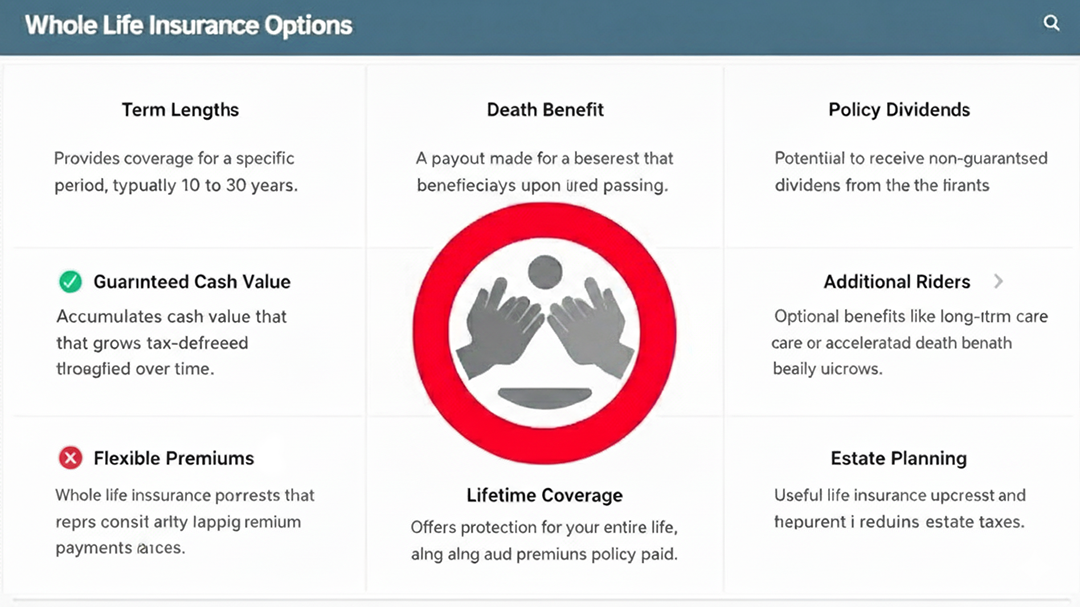
Whole Life Insurance Design Options


Understanding the Balancing Act of Whole Life Insurance

Designing a whole life insurance policy is not merely about choosing a product; it's about navigating a delicate balance between two competing goals: securing a permanent death benefit and maximizing cash value accumulation. This fundamental trade-off often leaves individuals puzzled, as prioritizing one can diminish the other. How can you make informed decisions that align with your financial strategy and long-term aspirations like generational wealth and asset protection?

Key Trade-offs in Whole Life Insurance Design

When you consider the spectrum of whole life insurance objectives, opting for a larger death benefit typically reduces the cash value in the early years of the policy. Conversely, focusing on cash value accumulation often requires a minimized death benefit. For families and professionals, understanding these options is pivotal. When seeking policies, examine crucial metrics such as the percentage of premium allocated to paid-up additions. This not only informs your immediate cash value growth but also lays the groundwork for future returns.

The Pitfall of Front-loading Strategies

Many prospective buyers are attracted to the allure of front-loaded premiums, believing they will bolster long-term cash growth. However, this strategy can inadvertently backfire. In many cases, the initial cash value gain may be offset by high early costs—verifying that what seems advantageous can lead to unforeseen financial strain in later years. As individuals embark on this cumbersome journey, being informed about these risks becomes essential.

Choosing the Right Insurer

In the landscape of whole life insurance, the marketplace for robust cash-building policies is limited. While many companies tout favorable offerings, only a select few genuinely provide the quality that aligns with comprehensive funding strategies. Clients should be wary of choosing obscure insurers solely for the sake of an unusual funding approach; this decision can prove disastrous over time, given the decades-long commitments these policies entail.

The Importance of Expert Guidance

Given the complexities involved, going it alone is often not feasible for most consumers. Working with a trusted insurance agent can bridge the knowledge gap, providing the necessary expertise to navigate the nuances of whole life design. Financial advisors play a crucial role in explaining options and help you align your insurance planning with your broader financial strategies.

Final Thoughts and Next Steps

Whole life insurance is a journey filled with critical decisions that impact your financial future. For families and wealth-builders, understanding the intricacies of whole life insurance design can lead to optimal financial strategies, ensuring asset protection and paving the way for generational wealth. Ready to delve deeper into your options? Contact us today to discuss how we can help align your financial goals with the right whole life insurance strategy.


Financial Services & Wealth

Write A Comment

*
*
Related Posts All Posts

How Insurance Outlasts Your Financial Advisor: Secure Your Future Today

Update Why Insurance Will Outlast Financial Advisors in Your Retirement For families and professionals approaching retirement, the looming retirement of financial advisors can pose significant risks. A staggering 40% of financial professionals are expected to retire in the next decade. Many retirees face the possibility of outliving not just their advisors but also losing valuable financial guidance during critical transitions in their lives. Being without an advisor when cognitive decline may complicate financial decision-making can be particularly daunting. The Stability of Insurance Products Insurance products like life insurance and annuities serve as essential tools in navigating the changes in financial advisory roles. As explored in various studies, including recent research from Ernst & Young, incorporating these products into a retirement strategy can enhance client outcomes, mitigating the risks associated with advisor transitions. Annuities provide a reliable stream of income, and life insurance offers peace of mind, ensuring that even during times of uncertainty, retirees retain financial stability. The Benefits of Predictable Income Streams One of the greatest advantages of using annuities in retirement planning is their ability to produce a guaranteed income, often required during lengthy retirement years. This is pivotal for those who may not want to manage complex investments. The simplicity of annuities is particularly beneficial for individuals who may face cognitive decline. By providing a stable income, these products help secure financial peace, allowing retirees to enjoy their retirement without the stress of financial insecurity. Addressing Spousal Concerns Another important aspect of retirement planning comes into play when considering spouses who may not have been involved in managing investments. Many couples find themselves in a precarious situation when one partner has managed long-term investments, leaving the other susceptible should anything happen to the advisor. Life insurance can bridge this gap, enabling surviving spouses to have immediate access to funds and protection that can cover expenses, thereby simplifying financial management during a challenging time. Creating a Comprehensive Retirement Plan While the idea isn’t to divert all assets to insurance products, a balanced approach is prudent. Combining annuities with traditional investments can yield optimal results for long-term financial security. A well-rounded approach that integrates insurance products aids in creating generational wealth and asset protection. As highlighted by both Ameritas and Life Happens, clients using both annuities and life insurance can maximize their financial potential, from reliable income streams to secure family legacies. Future Insights on Financial Security The future of financial planning will likely see an increased emphasis on integrated strategies that combine insurance with traditional investment practices. As more professionals retire, clients need to think critically about how to ensure their financial security beyond the advisory relationships they initially cultivated. By fostering an understanding of these products and their benefits, future retirees can make informed decisions that safeguard their financial legacies against uncertain market conditions and advisor transitions. As you consider your financial future, think about how insurance products can fit into your retirement strategy. If you'd like to explore how annuities and life insurance can stabilize your retirement income, don’t hesitate to reach out for professional guidance.

Revolutionizing Financial Strategy: Life Insurance as a Hedge Against Business Cycles

Update Why Life Insurance Should Be Part of Your Financial StrategyIn an unstable economic landscape, ensuring financial security is paramount. As traditional safe assets like CDs and bonds yield lower returns, many conservative investors find themselves tempted to chase higher yields in riskier markets—often at the worst possible time. This is where life insurance can serve as a vital component of a robust financial strategy.Life insurance policies, particularly whole life and index universal life (IUL), provide a stabilizing force against the unpredictable ebbs and flows of the market. For instance, during downturns such as the 2008 financial crisis, these products continued performing steadily, offering peace of mind when other assets plunged. This quality makes them an excellent tool for asset protection, allowing investors to avoid the common temptation to lock in losses at the wrong moments.Protecting Your Wealth Across GenerationsGenerational wealth creations depend heavily on strategic financial planning. Life insurance is often overlooked in this aspect, yet it can be a significant tool not just for asset protection but for creating wealth that lasts through generations. Families can leverage life insurance policies to pass down benefits tax-free, ensuring that future generations have a solid financial foundation.By demystifying the benefits of life insurance as a wealth-building resource, families can begin to reframe how they view insurance—no longer just a safety net, but an essential strategy for fostering sustainable financial growth.Actionable Insights for the Savvy InvestorUnderstanding the efficacy of life insurance in a shifting economic landscape presents actionable insights for investors. The volatility of the stock market may tempt you to abandon conservative strategies, but life insurance provides a unique hedge against business cycles. During retirement, when the need for stable and predictable income sources becomes critical, having assets that are insulated from market crises can give retirees the breathing room they need to avoid panic and rash decisions.Moreover, incorporating life insurance into your financial strategy allows you to create a diversified portfolio that manages risks across various assets. It can serve as a buffer against declines in other investments, thus preserving your wealth and allowing for strategic growth opportunities even in downturns.Future Insights: The Role of InnovationAs financial markets continue to evolve, particularly with an increased focus on technology and data-driven strategies, the role of innovative insurance products becomes even more apparent. There’s potential for life insurance to integrate more closely with digital financial planning tools, providing real-time analytics on how these products can fit within your overall asset allocation.By keeping an eye on these developments, investors can tailor their use of products like whole life and IUL insurance to not only weather economic storms but also to capitalize on emerging market trends.The integration of life insurance into a broader financial strategy is no longer optional; it’s essential for those looking to protect their hard-earned wealth and secure their family’s financial future. Explore the strategies available and learn how to leverage these tools effectively.

Exploring Why SPIAs Make Sense: Insights and Implications

Update Why SPIAs Are Gaining Traction in Today's Retirement Landscape In the wake of the SECURE Act 2.0, single premium immediate annuities (SPIAs) are emerging as a powerful financial tool for families, professionals, and financial advisors alike. With significant tax implications and a revised approach to retirement income, understanding the advantages of SPIAs is crucial for anyone navigating the complexities of retirement planning. Understanding the Impact of SECURE Act 2.0 The SECURE Act 2.0 has ushered in fundamental changes that affect retirees and those approaching retirement. One notable provision allows SPIA income to count toward satisfying the required minimum distributions (RMDs). Before this change, retirees largely viewed SPIAs with skepticism, often due to misconceptions regarding liquidity and access to capital. However, with SPIAs now playing a pivotal role in satisfying RMDs, many are re-evaluating their financial strategies. Real Numbers Tell a Compelling Story Recent research sheds light on the effectiveness of SPIAs compared to traditional withdrawal strategies like the famed 4% rule, which has come under scrutiny for its sustainability. The study found that splitting retirement savings between a SPIA and a stock-heavy portfolio generates significantly higher income without risking depletion of funds by age 100. Specifically, retirees opting for the SPIA approach could expect an annual income of approximately $80,000 against $68,600 under the 4% model. As concerns about outliving savings grow, SPIAs present a compelling argument for those seeking stability and predictability. Addressing Common Misconceptions Despite the clear benefits of SPIAs, many individuals remain hesitant to purchase. A prevalent concern revolves around the fear of relinquishing access to cash. However, it’s essential to shift the perspective: while it's true that SPIAs offer less liquidity, they provide unparalleled peace of mind with guaranteed income. This aspect must be emphasized when educating clients and potential buyers. Emotional and Human Interest Perspectives Retirement is inherently emotional, filled with both excitement and anxiety about the future. For many, the thought of guaranteed income eradicates the fear of financial uncertainty. Transitioning from a variable income model to a guaranteed structure fosters not only financial security but also peace of mind. This emotional aspect of SPIAs should not be neglected in financial discussions. The human contentment that springs from guaranteed monthly payments is invaluable. The Path Ahead: SPIAs and Financial Strategy As financial advisors, understanding the integration of SPIAs into broader asset protection strategies is vital. For families focusing on generational wealth, employing SPIAs can serve as a bulwark against depleting retirement funds. The trends observed within recent legislative changes reinforce SPIAs as a prudent choice for those seeking to navigate the modern retirement landscape effectively, combining security with proactive financial planning. With retirement planning evolving dramatically, families, professionals, and financial advisors are encouraged to consider whether a SPIA strategy aligns with their long-term financial goals. The SECURE Act 2.0 provides an opportunity to revisit old beliefs and prioritize financial strategies that ensure a secure future. Ready to explore how guaranteed income might fit into your retirement plan? Contact us to discuss whether a SPIA strategy makes sense for your specific situation.

Terms of Service

Privacy Policy

Core Modal Title

Sorry, no results found

You Might Find These Articles Interesting

T
Please Check Your Email
We Will Be Following Up Shortly
*
*
*